How to Draw a Black Bear
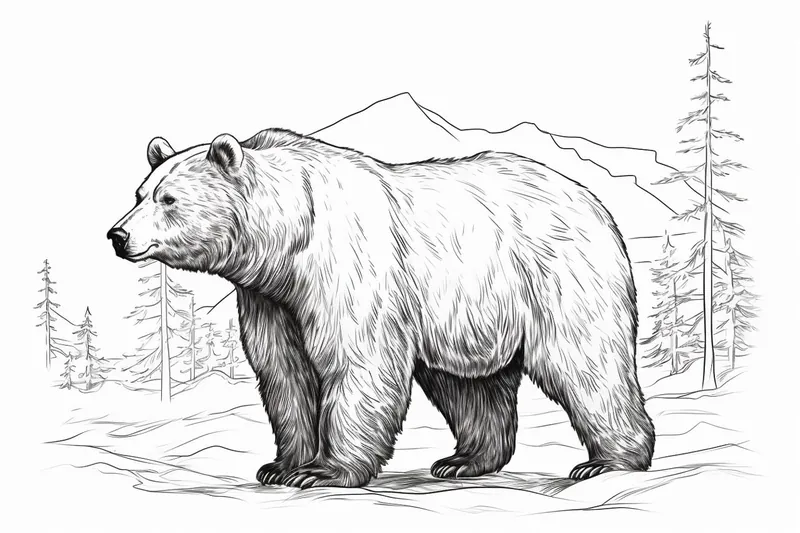
Learn how to draw a black bear with this step-by-step tutorial. Create a realistic representation of this majestic creature with clear and concise instructions.
Materials You'll Need
- Pencil
- Paper
- Eraser
Drawing wildlife can be an incredibly rewarding experience, and learning how to draw a black bear is a fantastic way to enhance your artistic skills while connecting with nature. Black bears are fascinating animals known for their strength, agility, and distinctive glossy black fur, making them a compelling subject for artists of all levels. Whether you are captivated by their powerful build or the subtle details of their fur and facial features, capturing a black bear on paper allows you to explore various textures and forms.
This tutorial on how to draw a black bear is designed to guide you through the entire process, from sketching the basic shapes to adding realistic details and shading. Suitable for beginners and more experienced artists alike, the step-by-step instructions will help you understand proportions, anatomy, and shading techniques that bring your drawing to life. You'll learn how to observe and translate the bear's unique characteristics onto your paper, improving your ability to depict wildlife realistically and confidently.
Embarking on this artistic journey is not only a chance to create a stunning piece but also an opportunity to deepen your appreciation for this majestic creature. With patience and practice, you'll find that drawing a black bear can be both fun and fulfilling. So gather your pencils and paper, and let's dive into this tutorial on how to draw a black bear — your next masterpiece awaits!
Materials Required
Before we begin, gather the following materials:
- Pencil (preferably a softer graphite pencil, such as a 2B or 4B)
- Eraser
- Drawing paper or sketchbook
- Reference image of a black bear
Having these materials ready will ensure a smooth and enjoyable drawing experience.
Step 1: Basic Shapes
To start, let's begin by drawing the basic shapes that make up the body of the black bear. Begin with a large oval to represent the bear's body. Next, add a smaller oval at the top to depict the bear's head. Finally, draw two overlapping circles to indicate the bear's ears. These shapes will serve as a foundation for the rest of the drawing.
Step 2: Facial Features
Now that we have the basic structure in place, let's focus on adding the bear's facial features. Start by sketching two small circles for the eyes, positioning them on either side of the bear's head. Then, draw a larger circle for the bear's snout, making sure it connects smoothly with the head. Next, add a small triangular shape for the bear's nose, and two curved lines on each side for the nostrils. Finally, draw a line for the mouth, slightly curved upward to create a friendly expression.
Step 3: Fur Details
One of the defining characteristics of a black bear is its thick fur. To capture this, we will add some fur details to our drawing. Starting from the top of the head, use short, curved lines to indicate the direction of the fur. Gradually work your way down the bear's body, paying attention to the contours and curves of the form. The fur should be slightly longer and more textured around the neck and shoulders, gradually getting shorter towards the back and hind legs.
Step 4: Body Proportions
Now that we have the bear's facial features and fur details, let's move on to refining the body proportions. Take a moment to observe your reference image and make any necessary adjustments to ensure accuracy. Pay attention to the size and positioning of the bear's limbs, as well as the overall shape of the body. Use light, guiding lines to make corrections if needed. Remember, it's better to take your time at this stage to get the proportions right.
Step 5: Adding Limbs and Paws
Next, we will add the bear's limbs and paws. Start by drawing the front limbs, which are thicker and more muscular than the rear limbs. Use simple curved lines to indicate the shape of the arms, keeping in mind the joint positions. Then, add the paws by drawing ovals at the end of each arm. Don't forget to include the claws! For the rear limbs, draw two elongated ovals, tapering towards the bottom to represent the bear's sturdy hind legs. Again, add ovals at the end to form the paws.
Step 6: Refining Details
At this stage, we will refine the details of our black bear drawing. Take a closer look at your reference image and carefully observe the texture and shape of the bear's fur. Use short, curved lines to add more definition and depth to the fur, paying attention to the direction of the hair growth. Take your time with this step, as the details will greatly enhance the realism of your drawing.
Step 7: Shading and Highlights
To bring our black bear drawing to life, we will add shading and highlights to create depth and dimension. Start by identifying the light source in your reference image. Use a darker pencil or increase the pressure on your pencil to shade the areas of the bear's body that are in shadow. Gradually build up the shading by layering your pencil strokes, paying attention to the contours of the body. For the highlighted areas, use an eraser to gently lift off some of the graphite, creating a contrast between light and dark.
Conclusion
Congratulations on completing your black bear drawing! By following these step-by-step instructions, you have created a realistic representation of this magnificent animal. Remember, practice makes perfect, so don't hesitate to try this tutorial multiple times to refine your skills. Keep exploring different subjects and techniques, and enjoy the journey of becoming an accomplished artist.
Fun Facts About Black Bear
- Black bears have an excellent sense of smell, which is about seven times better than a bloodhound's.
- Despite their name, black bears can have fur colors ranging from black to brown, cinnamon, and even blonde.
- Black bears are excellent climbers and often climb trees to escape danger or find food.
- They are omnivores, with diets that include fruits, nuts, insects, and small mammals.
- Black bears can run up to 30 miles per hour, faster than the fastest human sprinters.
- During hibernation, black bears do not eat, drink, urinate, or defecate for up to seven months.
- Mother black bears are very protective and will fiercely defend their cubs from threats.
- Black bears communicate through vocalizations, body language, and scent marking.
Suggestions for Scenes and Settings for Black Bear Drawings
- A black bear fishing in a rushing mountain stream, capturing the dynamic movement of water and the bear's focused expression.
- A mother black bear with her cubs nestled among dense forest foliage, showcasing tender family interactions and natural habitat.
- A black bear climbing a tall pine tree, emphasizing its agility and strength against the textured bark.
- A solitary black bear at dusk with a glowing sunset behind, highlighting the silhouette and soft fur details in low light.
- A black bear foraging in a meadow filled with wildflowers, combining delicate plant textures with the bear's rugged fur.
- A close-up portrait of a black bear's face with emphasis on the glossy fur, deep eyes, and wet nose for a detailed study.
- A black bear crossing a snowy landscape, with footprints and snowflakes adding atmosphere and texture.
- A playful black bear rolling on the forest floor covered with autumn leaves, capturing motion and seasonal colors.
- A black bear standing on a rocky outcrop overlooking a vast wilderness, expressing majesty and scale.
- A black bear interacting curiously with a small forest stream's reflection, blending realism with a touch of whimsy.