How to Draw a Bass Fish
Learn how to draw a bass fish with this step-by-step tutorial. Capture the unique characteristics of this fish in your own artwork. Perfect for beginners or experienced artists.
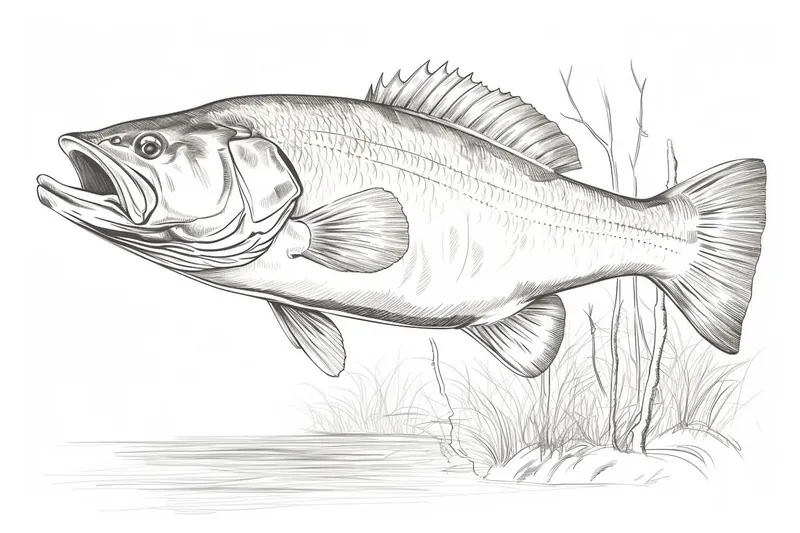
Materials You'll Need
- Pencil
- Paper
- Eraser
Drawing a bass fish offers a unique opportunity to explore the detailed anatomy and natural beauty of one of freshwater fishing's most iconic species. The bass fish, known for its robust body, distinctive dorsal fins, and textured scales, provides an excellent subject for artists interested in wildlife or aquatic themes. Whether you're drawing for relaxation, to improve your observational skills, or to create art for a fishing enthusiast, learning how to draw a bass fish can be both satisfying and creatively enriching.
In this tutorial, we will guide you step-by-step through the entire process, starting with the basic shapes that form the fish's body and moving toward the more intricate details like the fins, eyes, and textured scales. This drawing project suits artists of all skill levels—beginners will appreciate the clear, manageable steps, while more experienced artists can focus on refining textures and shading techniques to bring the bass to life. By practicing proportions, line work, and shading, you will develop your ability to capture both the form and personality of this lively fish.
So if you've ever wanted to combine your love of nature with your passion for drawing, this tutorial on how to draw a bass fish is the perfect place to start. With patience and practice, you'll not only create a beautiful piece of art but also deepen your appreciation for this fascinating creature. Grab your pencils and sketchbook, and let's dive into the rewarding process of bringing a bass fish to life on paper!
Materials Required
Before we begin, let's gather the materials you will need:
- Pencil: Choose a medium-grade pencil that allows you to achieve both light and dark lines.
- Eraser: A kneaded eraser or a vinyl eraser will help you make corrections and clean up any unwanted lines.
- Sketchbook or Drawing Paper: Select a smooth surface paper that is suitable for pencil drawings.
- Reference Image: Find a clear, high-quality image of a bass fish to use as a reference. You can use a photograph or search for a reference image online.
Now that you have your materials ready, let's dive into the steps of drawing a bass fish!
Step 1: Basic Outline
Start by lightly sketching the basic outline of the bass fish. Begin with a simple oval shape to represent the body. Then, add a slightly curved line that extends from the back of the head to indicate the back. Connect the body and the back with a gentle curve to form the belly. Remember to keep your lines light and loosely drawn at this stage.
Step 2: Fin Placement
Next, add the placement lines for the fins. The bass fish has several fins, including the dorsal fin, pectoral fins, pelvic fins, and caudal fin. These fins provide the fish with stability and allow it to swim gracefully. Carefully observe the reference image and lightly sketch the fin positions. Take note of the size and shape of each fin as they may vary between different types of bass fish.
Step 3: Eye and Mouth
Move on to drawing the eye and mouth of the bass fish. The eye is generally located on the upper side of the head, closer to the snout. Depict the eye using a small oval shape and add a tiny circle inside to represent the iris. Draw a small triangle shape for the mouth, with a tiny curve at the end to suggest the lower lip. Remember to keep your lines light and adjust the shapes as needed.
Step 4: Body Details
Now, let's add some details to the body of the bass fish. Start by drawing a curved line that begins at the back of the head and extends towards the tail, following the contour of the body. This line represents the lateral line, a prominent feature of the bass fish. Then, add additional lines to indicate the scales on the body. These lines should follow the shape of the body and gradually become smaller towards the tail.
Step 5: Fins and Tail
Refine the placement lines of the fins and tail that you sketched earlier. Add more definition and shape to each fin, making sure to follow the reference image closely. Pay attention to the curves and angles of the fins, as they contribute to the overall appearance of the fish. Use light, curved lines to suggest the fins and tail, creating a sense of motion and flow.
Step 6: Final Details
In this final step, focus on adding the finishing touches to your bass fish drawing. Pay close attention to the intricate details such as the gills, mouth, and scales. Use small, delicate lines to suggest the texture and patterns on the body. Take your time to observe the reference image and capture the unique characteristics of the bass fish.
Conclusion
Congratulations! You have successfully learned how to draw a bass fish. By following these step-by-step instructions and practicing your observation skills, you can create a realistic and detailed representation of this fascinating fish. Remember to keep experimenting and refining your technique, as each drawing is an opportunity for growth and improvement.
So grab your pencil and start sketching your very own bass fish today!
Fun Facts About Bass Fish
- Bass fish are popular freshwater game fish known for their fighting spirit, making them a favorite among anglers.
- The largemouth bass can grow up to 29 inches long and weigh over 20 pounds in the wild.
- Bass have a specialized lateral line system that helps them detect vibrations and movements in the water.
- They are ambush predators, often hiding in vegetation or structures to surprise their prey.
- Bass fish can live up to 16 years in the wild under optimal conditions. Indiana DNR
- Their diet mainly consists of smaller fish, insects, and crustaceans, showcasing their role as top freshwater predators.
- Bass are native to North America but have been introduced worldwide for sport fishing.
- Their distinctive dorsal fins are divided into two parts: a spiny front section and a soft-rayed rear section.
Suggestions for Scenes and Settings for Bass Fish Drawings
- A bass fish swimming near submerged tree roots in a clear freshwater lake, with rays of sunlight filtering through the water.
- A close-up of a bass fish hunting, with its mouth open and water bubbles around, capturing the moment of action.
- A bass fish resting among aquatic plants and lily pads, showcasing the natural habitat and camouflage.
- A side profile of a bass fish jumping out of the water, creating dynamic splashes and ripples.
- An underwater scene showing a school of bass fish swimming together near a rocky riverbed.
- A bass fish silhouetted against a sunset sky reflected on the calm surface of a pond.
- A detailed study focusing on the textured scales and fins of a bass fish, emphasizing anatomy and shading.
- A bass fish caught on a fishing line, with the tension of the line and the excitement of the catch illustrated.
- A bass fish in a natural stream, surrounded by flowing water and small pebbles, highlighting movement and environment.
- A whimsical scene of a bass fish interacting with other freshwater creatures like frogs and turtles in a vibrant ecosystem.