How to Draw a Bactrian Camel
Learn how to draw a Bactrian Camel with this step-by-step tutorial. Explore the detailed instructions and improve your drawing skills. Perfect for beginners and aspiring artists.
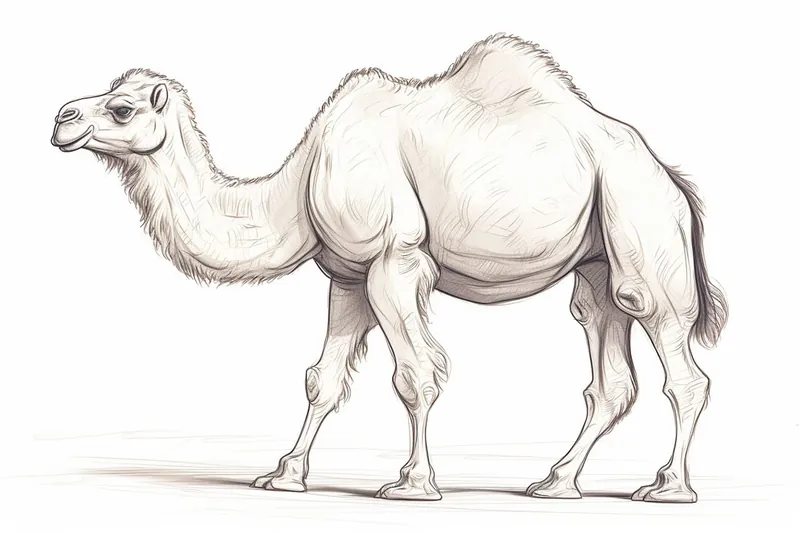
Materials You'll Need
- Pencil
- Paper
- Eraser
The Bactrian camel, native to the vast, arid regions of Central Asia, is a truly remarkable animal known for its two prominent humps and its ability to thrive in some of the world's harshest environments. Unlike its single-humped cousin, the dromedary, the Bactrian camel's distinctive silhouette and thick, shaggy coat make it a unique and fascinating subject for artists. Learning how to draw a Bactrian camel not only allows you to capture the beauty and resilience of this extraordinary creature, but also offers a chance to explore animal anatomy, texture, and form in your artwork.
This tutorial is designed for artists of all levels, whether you're picking up a pencil for the first time or looking to enhance your skills by tackling a more challenging subject. Drawing a Bactrian camel involves mastering basic shapes, paying attention to proportions, and applying shading techniques to bring out the animal's robust build and characteristic humps. By following the step-by-step instructions on how to draw a bactrian camel, you'll gain valuable practice in observation and detail work, skills that will benefit you in many other artistic endeavors. Don't worry if your first attempt isn't perfect—every drawing is a learning experience! Gather your materials, set aside some creative time, and get ready to bring this incredible creature to life on paper.
Materials Required
Before we begin, make sure you have the following materials:
- A pencil (preferably an HB or 2B for easier shading)
- Eraser
- Paper or sketchbook
- Pencil sharpener
- Ruler (optional, for measuring proportions)
- Reference image of a Bactrian Camel (for guidance)
Having these materials ready will ensure a smooth drawing process and help you achieve the best results.
Step 1: Basic Outline
Start by lightly sketching a basic outline for the Bactrian Camel. Begin with a large oval shape for the body, slightly tilted diagonally. Then, add a smaller oval shape above the body to represent the camel's head. Connect the head and body with a curved line for the neck. Don't worry about adding too many details at this stage; we'll be refining the outline later on.
Step 2: Legs and Humps
Tip: As you work through the steps of drawing a Bactrian camel, consider using light, fluid strokes during your initial outlines to maintain flexibility for adjustments; this will make refining shapes and adding details much easier later on. Additionally, take regular breaks to step back and assess your drawing from a distance, as this can help you spot areas that may need more attention or correction.
Next, let's sketch the legs and humps of the camel. Using straight lines, draw four legs extending from the body. Bactrian Camels have longer legs on the front and shorter legs on the back, so keep that in mind when drawing. Add two humps on the top of the body, slightly rounded and connected to each other. These humps are one of the defining features of the Bactrian Camel.
Step 3: Head and Facial Features
Now, let's focus on the head and facial features of the camel. Refine the shape of the head by adding more detail and rounding off the edges. Use a curved line to indicate the snout and add a small circle for the eye. Bactrian Camels have long, curved ears, so draw them as well. Don't forget to add a small bump for the camel's mouth and a few lines to represent fur detail around the face.
Step 4: Tail and Feet
Move on to the camel's tail and feet. Draw a long, slender tail extending from the back of the body, slightly curving upwards at the end. For the feet, draw four rectangular shapes at the end of each leg to represent the hooves. Remember to add some lines and curves to indicate the joints and shape of the hooves.
Step 5: Refine the Outline
Now it's time to refine the outline of your camel drawing. Go over the initial sketch, adding more definition and detail to the body, legs, humps, head, and other features. Pay attention to the contours and curves of the camel's body, making sure they are accurate and proportionate. Use a darker pencil or pen to outline the final shape.
Step 6: Shading and Texture
To add depth and realism to your camel drawing, it's important to incorporate shading and texture. Start by identifying the light source in your reference image, which will determine the placement of highlights and shadows. Use your pencil to shade the areas in shadow, gradually building up the darkness. For the fur texture, create short, overlapping strokes with your pencil, following the direction of the fur.
Step 7: Final Details
Finally, add the finishing touches to your drawing. Pay attention to the small details that make a Bactrian Camel unique, such as wrinkles on the humps, tufts of fur around the joints, and texture on the hooves. Take your time to add these intricate details, as they can greatly enhance the overall realism of your artwork.
Congratulations! You have successfully drawn a Bactrian Camel. With practice, you'll be able to create even more complex and lifelike drawings. Remember, drawing is a skill that takes time and patience to develop, so keep practicing and exploring different subjects.
Did You Know?: Bactrian camels aren't just notable for their two humps—they're also among the toughest mammals on earth! These incredible animals can survive temperature swings from -40°C in the icy winters of the Gobi Desert to scorching summer highs of over 40°C, thanks to their thick, insulating coats and remarkable ability to conserve water. Their humps store fat, not water, which fuels them during long journeys across barren landscapes. As you draw, pay special attention to their furry legs and bushy eyebrows—these unique features help shield them from sandstorms and extreme weather, adding fascinating texture and character to your artwork.
Conclusion
In this tutorial, we explored the step-by-step process of drawing the majestic Bactrian Camel. By following these instructions and using your creativity, you can create a stunning artwork that captures the essence of this unique creature. Remember to have your materials ready, start with a basic outline, refine the details, add shading and texture, and finish with the final touches. With each drawing, you'll improve your skills and gain a deeper appreciation for the art of sketching.
So pick up your pencil and sketchbook, and embark on this exciting artistic journey. Before you know it, you'll be able to draw not just camels, but various other subjects as well. Enjoy the process, embrace your creativity, and showcase your remarkable drawing skills!
Fun Facts About Bactrian Camel
- The Bactrian camel is easily recognized by its two humps, unlike the single-humped dromedary.
- Bactrian camels can survive extreme temperatures, from -40°C in winter to 40°C in summer, as detailed by Encyclopaedia Britannica.
- They are native to the steppes of Central Asia, particularly the Gobi Desert.
- Bactrian camels can drink up to 57 liters of water in one go.
- Their thick, shaggy coats protect them from cold and are shed in the summer.
- Wild Bactrian camels are critically endangered, with fewer than 1,000 left in the wild.
- They can close their nostrils to keep out sand during sandstorms.
- Bactrian camels have been domesticated for over 4,000 years and are vital for transport and milk in Central Asia.
Suggestions for Scenes and Settings for Bactrian Camel Drawings
- A Bactrian camel trekking across windswept sand dunes with its thick coat ruffled by the cold desert wind.
- A caravan of Bactrian camels carrying colorful woven goods along the ancient Silk Road, with distant mountains in the background.
- A close-up portrait of a Bactrian camel's head, focusing on its expressive eyes, long eyelashes, and shaggy fur texture.
- A herd of Bactrian camels huddled together for warmth in a snowy Central Asian steppe landscape.
- A Bactrian camel resting beside a nomadic yurt, with traditional Mongolian decorations and supplies nearby.
- A young Bactrian camel calf standing close to its mother, showing the size and proportion differences in a natural setting.
- A dramatic silhouette of a Bactrian camel against a setting sun, highlighting its two distinctive humps.
- A Bactrian camel drinking from an oasis, with sparse desert plants and rocks framing the scene.
- An explorer or traveler riding a Bactrian camel, traversing a vast, arid plateau with distant storm clouds approaching.
- A playful scene of Bactrian camels interacting—nuzzling, running, or rolling in the dust—in a wild, open landscape.